Solid Surface Basins: Fabricated, Thermoformed or Moulded?
A similar-looking basin can be made by different production routes. Buyers should confirm the construction method before comparing a basin or integrated vanity top quotation.
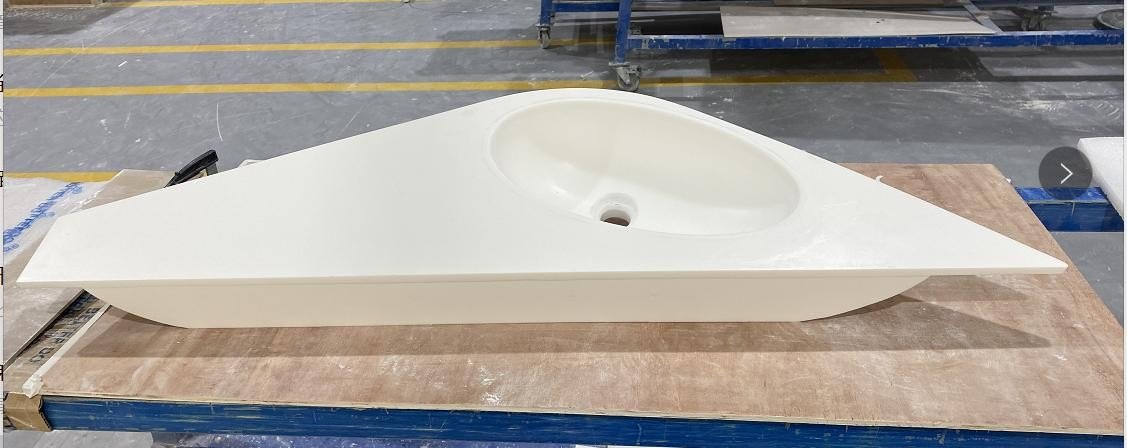
Fabricated from sheet material
Sheet fabrication can combine cutting, CNC machining, forming, joining and finishing. The approved drawing determines the bowl geometry, countertop layout, edges and connection details. Ask which components use the specified sheet material and where joints will be positioned.
Where thermoforming fits
Thermoforming shapes a suitable sheet using heat and tooling. It is a processing step, rather than proof that a complete basin is made without joints. Material selection, geometry and tooling must be reviewed together. KSTONE confirms feasibility for the actual design instead of applying a single bending promise to every colour and product.
A moulded basin is a different specification
A product made through a casting or another moulding process should be described by that process and its actual material specification. A smooth surface or an integrated appearance alone does not establish that it was fabricated from acrylic solid surface sheet. Confirm the manufacturing route for the selected model.
What “integrated vanity top” tells you
Integrated describes the relationship between the basin and countertop. It does not, by itself, identify how each part is manufactured. Confirm the bowl type, top material, joint arrangement, overflow, waste outlet and cabinet interface before approving a sample or production drawing.
Fabricated vs. Cast Solid Surface Basins: A Buyer’s Guide
Forming method
A sheet-fabricated basin starts with solid surface sheet that is cut, shaped and joined as the design requires. Thermoforming shapes heated sheet over tooling. A cast basin is formed from a mix in a mould. Ask how the bowl and deck are each made and where the joint sits.
Size and tooling
For a bespoke cabinet, send the opening, bowl depth, waste position and drawer clearance. A standard cast bowl may work with a custom deck. If you change the bowl geometry, ask whether the supplier needs new tooling and how that affects sample and repeat orders.
Colour and finish
For a matched deck and bowl, specify the sheet brand and colour code or a physical reference. If the bowl and deck come from different production routes, compare both finished pieces under the same lighting before approving a match.
Prototype approval
Fit the sample to the intended cabinet. Check the drain and overflow, rim profile, visible joints, colour and finish. For a repeat range, record the approved drawing revision, material and finish so repeat orders use the same specification.
Explore custom solid surface basins · View basin models and download the catalogue · Send your basin drawing
Compare the complete proposal
Use the same dimensions, material reference, finish, quantity and packing scope when comparing offers. KSTONE can review a standard catalogue bowl or a custom basin layout. The manufacturing route and agreed material should be recorded in the order specification. For a repeat bathroom range, use the OEM vanity top specification checklist to document cabinet clearance, edge construction and prototype approval.