
Solid Surface Planter Cladding: Coordinating the Liner, Access and Supply Scope
An indoor planter surround is one part of a coordinated assembly. Define the liner, water-management details, access and support responsibilities before ordering its solid surface cladding.
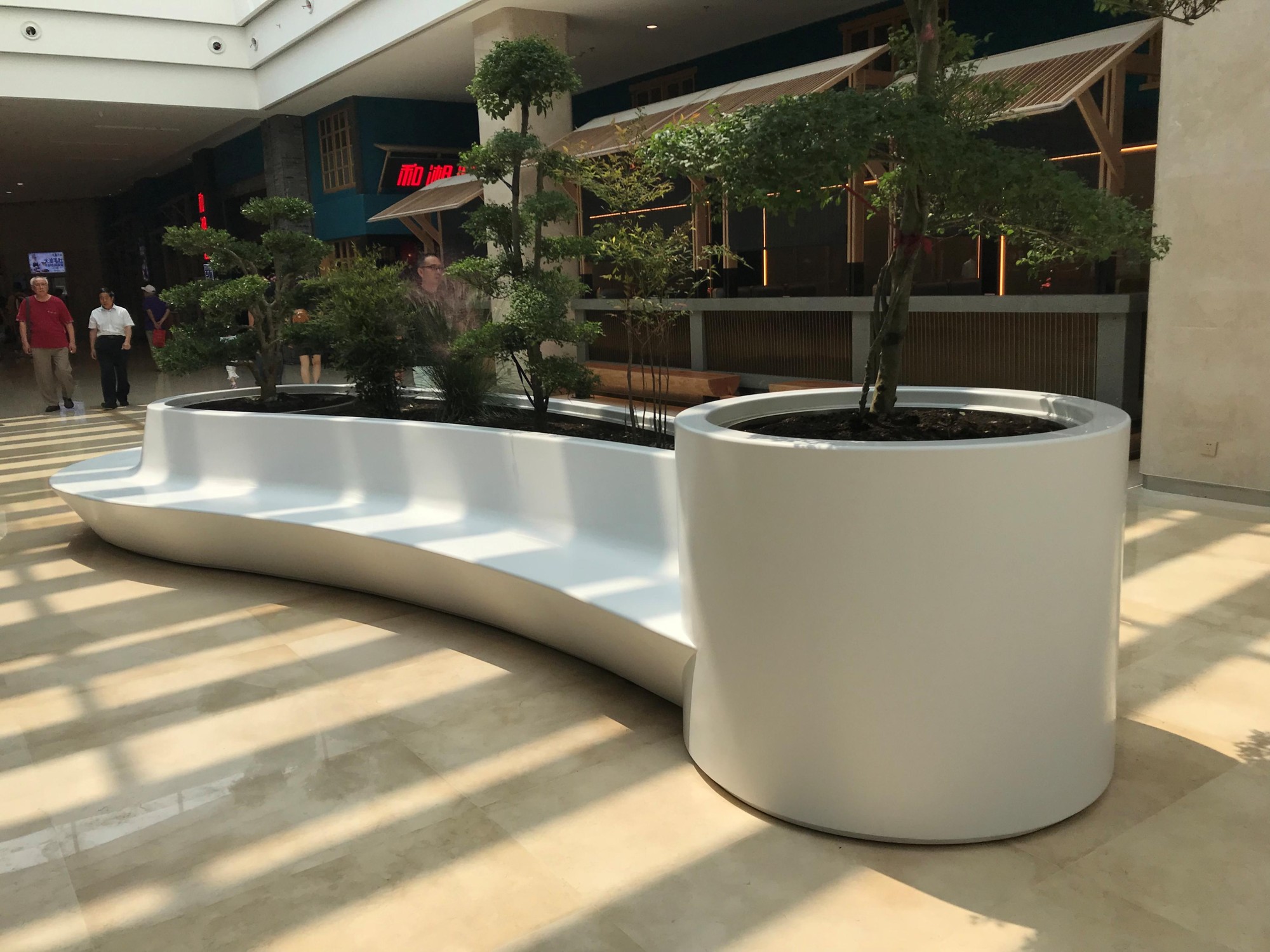
Separate the decorative surround from the planting container
For an indoor commercial project, start by listing the parts of the planter assembly. A solid surface outer surround, a planting liner, a supporting structure and an irrigation arrangement are separate items unless the agreed specification combines them. Do not assume that a cladding quotation includes a watertight planting vessel. State which supplier owns each part and which team coordinates their interfaces. This guide concerns the fabricated surround, not a universal planter construction detail.
Obtain the liner dimensions before freezing the outline
Ask the liner supplier for the relevant external dimensions, rim details and installation requirements. Show how the liner will enter the surround and how it can be removed if replacement is required. Review the opening together with the intended lifting or handling method. A planting area shown on a concept drawing does not establish the finished liner interface. For multiple planters, distinguish a common liner size from location-specific surrounds.
Assign the water-management details
Have the responsible planting and building-services teams define irrigation, overflow and drainage needs for the actual location. Mark any required penetrations on an approved coordination drawing and identify who makes and seals them. Avoid leaving an instruction such as drill on site without assigning responsibility. Ask those teams to confirm how leaks or maintenance water will be managed. A continuous-looking exterior should not be taken as evidence that the complete assembly is watertight.
Plan maintenance access around the finished interior
Show the parts that must be reached after planting and surrounding finishes are installed. Identify whether access is from above, through a separate opening or by removing a component. Include nearby walls, furniture and circulation space in the review. A service point that is easy to reach before planting may be concealed later. Confirm which party supplies any access components and documents the maintenance procedure.
Define the surround, joints and transport sections
Show the visible outer faces, top edges and any returns in the fabrication drawing. For curved or long surrounds, ask the fabricator to propose a practical division into supplied sections. Review joint locations against the visual design and local assembly access. Identify who completes remaining site joints or connections. The delivery route and available handling space should be reviewed before choosing a single large assembly solely for its appearance.
Review seating and support as separate responsibilities
If seating is combined with the planter, the complete design needs its own review by the responsible project team. State who designs and supplies the support and how the seat relates to the liner and surround. A photograph of combined seating and planting is not a load rating. Do not infer support requirements or permissible spans from it. Keep the accepted support arrangement and fabrication boundaries in the drawing package.
Approve material and the complete supply schedule
Select the material and finish through physical samples and an agreed representative detail where needed. Keep an original-brand material specification distinct from a KSTONE alternative. Record each planter reference, liner reference, drawing revision, supplied sections and outstanding work by others. Ask the supplier to identify exclusions explicitly, including planting, irrigation, supporting frames and installation when these are outside the quoted scope. That schedule helps project procurement compare like-for-like offers.
Discuss your fabrication requirements
For a custom planter surround, send the proposed layout, liner information, quantities and delivery constraints. Highlight unresolved interfaces so they can be discussed before the fabricated parts are ordered.
Explore Custom Fabrication and Materials & Colours. For bathroom product orders, see Basins & Vanity Tops. Send Your Drawings, Request Material Samples or Request a Quote.