Solid Surface Vanity Top Thickness: Sheet vs Built-Up Edge
Specify the actual deck thickness and the visible edge depth separately to avoid surprises in cabinet design and quotations.
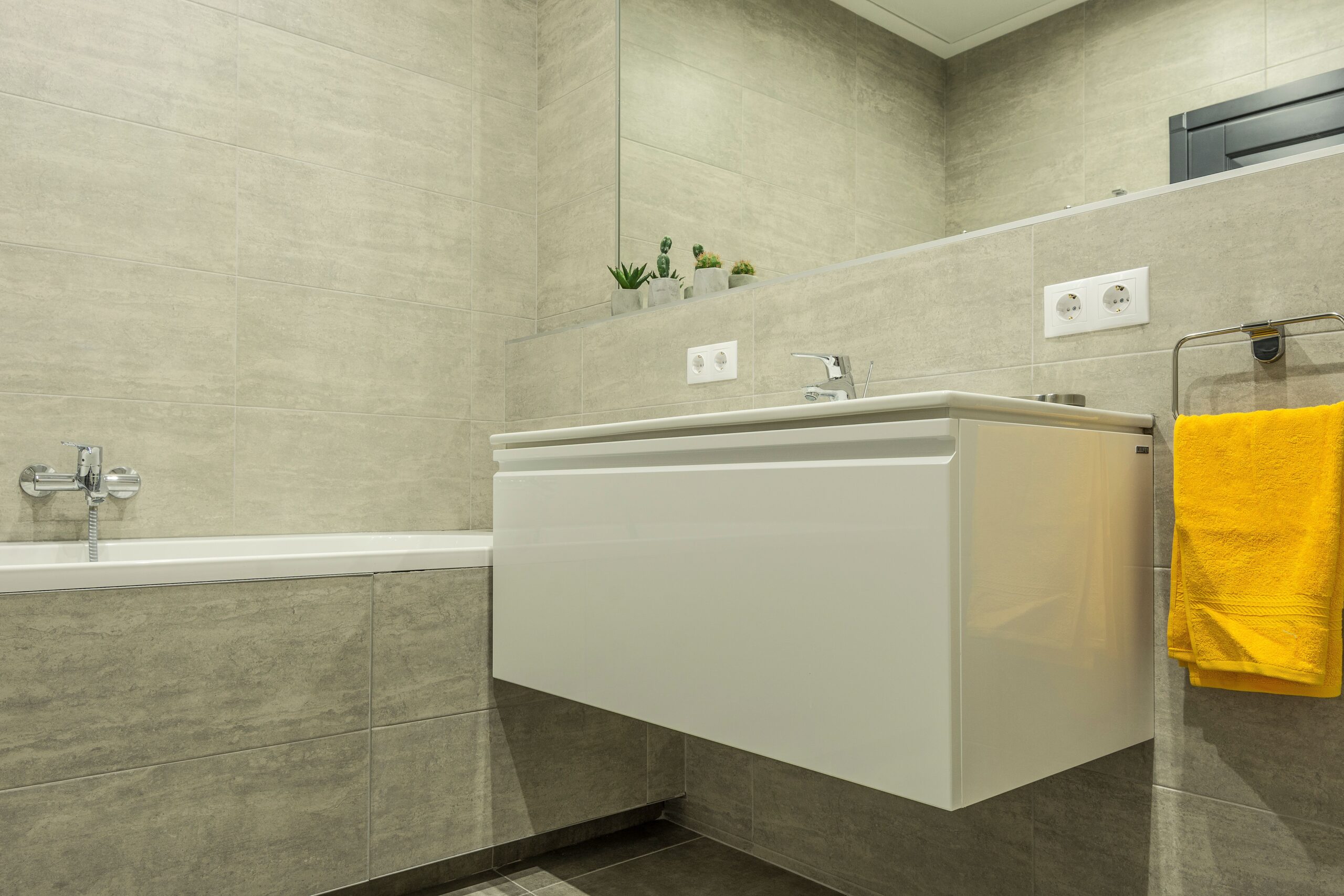
A drawing that says “40 mm vanity top” can describe two very different products: a thick panel across the whole surface, or a thinner deck with a deeper front edge. For bathroom brands, cabinet manufacturers and project buyers, that distinction affects the cabinet opening, basin clearance, material consumption and the quotation.
The practical rule: specify the actual deck thickness and the finished visible edge depth separately. A front view alone is not enough to approve a custom solid surface vanity top.
What does vanity top thickness actually mean?
Before comparing offers, separate these three dimensions:
- Deck thickness: the material thickness across the working surface.
- Visible edge depth: the height of the front or side fascia seen after installation.
- Overall assembly depth: the space occupied by the top, basin, reinforcements and any mounting components beneath it.
These dimensions do not have to be equal. A vanity with a substantial front edge may still have a thinner deck behind that edge. Conversely, a genuinely thick panel uses additional material across its full area.
A thicker-looking edge does not require a thick panel everywhere
Solid surface fabrication can create a deeper edge by bonding material to the deck. Two established approaches are layered buildups and a drop edge made from an upright strip. The right detail depends on the selected material, colour, profile and fabrication requirements.
That is why a specification such as “12 mm deck, 40 mm finished front fascia” is more useful than simply “40 mm top”. It communicates the intended appearance without leaving the hidden construction to interpretation. The example is a drawing convention, not an automatic production recommendation: the fabricator must review the section before approval.
Corian® publishes brand-specific guidance on edge details and buildups. Its methods should not be assumed to apply unchanged to every other solid surface product.
How to compare a plain edge, built-up edge and thick deck
Plain sheet edge
A plain edge gives a slim visual line. Confirm the exposed edge finish, corner treatment and how the cabinet supports the top. A slim appearance does not remove the need for a reviewed support arrangement.
Built-up or drop edge
This approach creates a deeper visible face. Specify whether the fascia runs along the front only, returns down the sides, or continues around exposed ends. Also identify which surfaces will remain visible when a drawer or door is open.
Thick deck across the full area
Request this explicitly if the design requires it. Ask the supplier to identify whether the proposed section is a single thick sheet or a laminated assembly. Do not compare it with a fascia-only construction as if the material quantities were the same.
Five details to resolve before cabinet production
- Drawer and door clearance. Show the cabinet top line, fascia bottom and any drawer fronts in the same section. Check that a dropped edge will not obstruct movement.
- Basin envelope. Include the bowl depth, flange or bonding area, waste fitting and trap space. The underside of the top is only one part of the required clearance.
- Tap fixing. Verify the actual tap model, mounting hole and fixing range. The visible edge depth does not tell you the thickness at the tap mounting point.
- Supports and overhangs. Submit the cabinet or bracket layout. Neither a deeper fascia nor a larger nominal thickness automatically approves an unsupported span.
- Exposed ends and wall junctions. Mark side returns, backsplashes, wall gaps and the intended finish on every exposed face.
Why colour and edge construction should be approved together
A white or fine-particle colour and a strongly veined colour may need different appearance reviews. A colour chip helps select the material, but it does not demonstrate how a bonded corner or front edge will look. For a visible detail, ask for a sample of the proposed edge section in the selected material and finish.
When comparing an original-brand material with a KSTONE option, keep the quotations and sample approvals separate. Similar colours are not identical materials. Confirm the colour, finish and suitability of the actual option you intend to order. Explore the materials and colours available for fabrication.
How thickness decisions affect a B2B quotation
Ask suppliers to quote against the same cross-section, not just the same overall length and depth. The scope should state deck thickness, edge construction, side returns, basin quantity, exposed faces and supplied mounting components. Packaging and delivery terms should also be comparable.
A useful approval note might read: “Dimensions in millimetres. Show deck thickness separately from finished fascia depth. Confirm construction, basin clearance and cabinet support before manufacture.” Add a section drawing rather than relying on this note alone.
Frequently asked questions
Is a 40 mm edge a solid 40 mm slab?
Not necessarily. It may be a built-up or dropped edge. Request a cross-section and ask what thickness continues across the full deck.
Can a thicker edge replace cabinet support?
Do not assume so. Support depends on the complete design, openings, material and installation. Submit the support layout for review.
Should I approve an edge sample as well as a colour sample?
Yes, when the edge appearance matters to your product. A fabricated section shows the profile, joint and finish more clearly than a flat colour chip.
Discuss your vanity top section with KSTONE
KSTONE operates sheet production and fabrication facilities. We can review your proposed deck, fascia and basin arrangement as part of a custom solid surface fabrication enquiry. Browse basins and vanity tops, then send the plan, one cross-section, material preference, quantity and delivery country.
Send Your Drawings · Request a Quote · Request Material Samples
Featured photograph: Max Vakhtbovych / Pexels, used under the Pexels License. Bathroom design reference only; not a KSTONE project or evidence of the pictured material or construction.